
Follow Us
Admissions Open
Child Skills Development

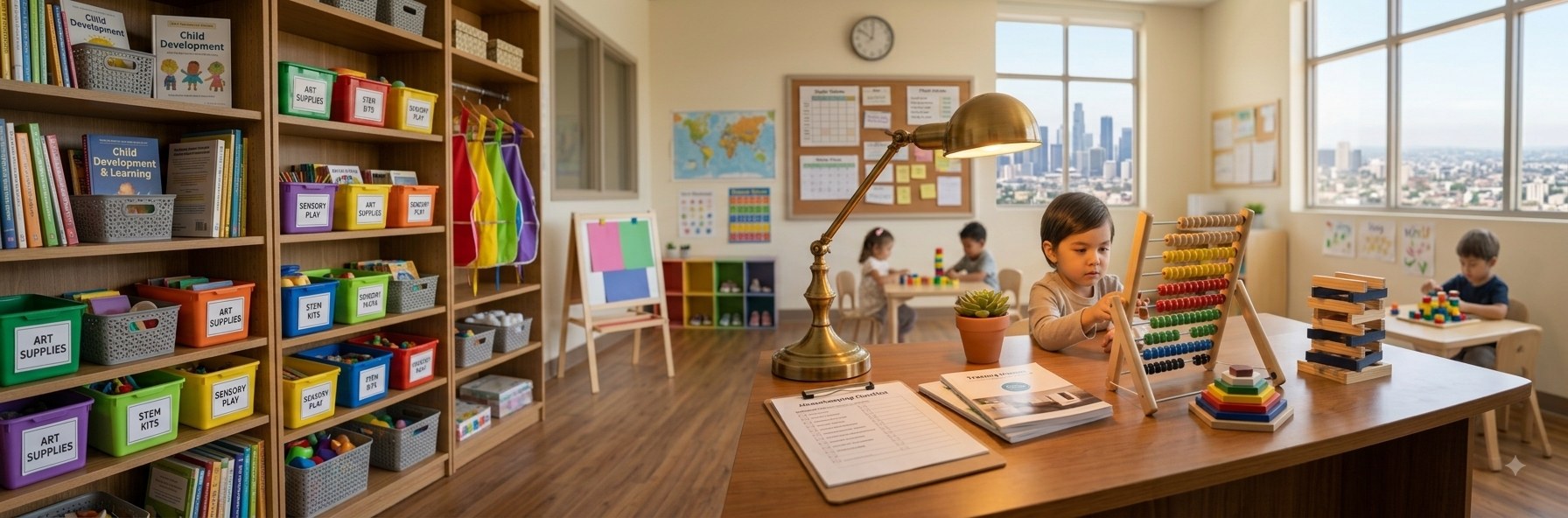
Abacus & Brain Development Program

1- 2 Months Face-to-face | Online Child Skills Development
Child Skills Development

Abacus & Brain Development Program

1- 2 Months Flexible Learning Duration
Face-to-face | Online Learn Your Way
Child Skills Development Gain Practical Skills
Certified Qualification
Experienced Trainers
Better Career Opportunities

Overview

Welcome to CNA Training Institute, where we support children's learning and development through engaging, practical, and age-appropriate programmes. Our Abacus & Brain Development Program is designed for children aged 5–15 years to strengthen numerical skills, concentration, memory, logical thinking, and mental calculation abilities.

Through structured abacus exercises, mental arithmetic, number activities, and brain-training exercises, learners develop confidence in working with numbers while building important cognitive and learning skills.


About the Abacus & Brain Development Program

The Abacus & Brain Development Program introduces children to abacus-based learning and mental arithmetic in a progressive and engaging way. Learners develop their understanding of numbers by using visualisation, calculation techniques, and repeated practice.

The programme goes beyond arithmetic by incorporating activities that encourage concentration, memory, observation, logical reasoning, speed, and accuracy. Activities are adapted to different ages and ability levels, allowing children to progress gradually as their skills develop.

By combining hands-on abacus practice with mental calculation and brain-development activities, the programme encourages children to become more confident, focused, and organised when approaching numerical and learning tasks.

How Do You Benefit from the Abacus & Brain Development Program?

The programme helps children strengthen their numerical abilities while developing concentration, memory, mental calculation, logical reasoning, and confidence. Regular practice encourages learners to approach numbers systematically and can support broader learning skills such as attention, problem-solving, and information processing.

Course Highlights

Age-Appropriate Learning

Designed for children aged 5–15 years, with activities adapted to different developmental stages.

Abacus Training

Introduces children to practical abacus techniques for understanding and calculating numbers.

Mental Arithmetic

Develops mental calculation skills through structured exercises and regular practice.

Concentration Building

Uses focused activities to encourage sustained attention and accuracy.

Memory Development

Includes exercises that encourage children to retain and recall numerical information.

Logical Thinking

Supports reasoning and structured approaches to solving numerical challenges.

Speed & Accuracy

Encourages children to improve calculation speed while maintaining accuracy.

Visualisation Skills

Develops the ability to visualise numbers and calculations mentally.

Progressive Learning

Allows learners to build skills gradually through structured activities.

Confidence Building

Encourages children to become more comfortable and confident when working with numbers.

Certificate of Completion

Participants receive a CNA Training Institute Certificate of Completion upon successful completion of the course requirements.

KHDA Recognised Qualification

This qualification is KHDA-approved and comes with a KHDA-attested certificate upon successful completion.

Course Modules and Skills

The programme combines abacus practice, mental arithmetic, and age-appropriate brain-development activities to strengthen numerical and cognitive skills.

01
Understand basic numbers and numerical relationships.
02
Learn how to use an abacus for simple calculations.
03
Develop familiarity with abacus beads, values, and movement.
04
Practise addition and subtraction using the abacus.
05
Progress towards multiplication and division calculations.
06
Develop mental arithmetic techniques through structured practice.
07
Visualise the abacus and numbers without physically using the tool.
08
Improve calculation speed and accuracy.
09
Develop concentration through focused numerical activities.
10
Strengthen short-term memory and numerical recall.
11
Practise pattern recognition and sequencing activities.
12
Develop logical reasoning and problem-solving skills.
13
Improve observation and attention to detail.
14
Practise number comparison and estimation.
15
Solve age-appropriate numerical challenges.
16
Develop confidence when working with numbers.
17
Apply mental calculation strategies to everyday numerical situations.
18
Participate in individual and group brain-development activities.
19
Monitor personal progress and identify areas for continued practice.

Course Summary

Key information about the course at a glance.

Entry Level Requirements

  • Good Communication in English
  • Passport/Emirates ID
  • Minimum age: 5-15 Years

Course Duration

  • 1-2 Months
  • Online and face-to-face classes
  • Flexible schedule.

Credentials

Certificate attested by KHDA Dubai.

Course Fee & Payment Options

  • Contact us for the current course fee.
  • Flexible installment options are available.
  • Payable by bank transfer or payment link.

Course Structure and Assessment

The programme follows a progressive learning approach, beginning with foundational abacus and numerical concepts before introducing more advanced calculation and mental arithmetic activities. Exercises are adjusted according to the learner's age, existing knowledge, ability, and pace of development.

Assessment is primarily practical and may include calculation exercises, abacus activities, mental arithmetic tasks, timed exercises, memory activities, and observation of learner progress. Regular practice and participation are important components of the learning process.

Developmental Benefits

The programme supports children's numerical learning and cognitive development through structured practice and engaging activities.

  • Improved numerical confidence
  • Stronger mental calculation abilities
  • Enhanced concentration and attention
  • Improved memory and recall
  • Development of logical reasoning
  • Better observation and pattern recognition
  • Increased calculation speed and accuracy
  • Stronger problem-solving skills
  • Improved confidence in mathematics
  • Development of disciplined and focused learning habits

Frequently Asked Questions

Find quick answers to the most common questions about our courses,
enrollment process and more.

What is the age group for this programme?

The programme is designed for children aged 5–15 years, with activities adapted to different age groups and ability levels.

Does my child need previous abacus experience?

No. Beginners can start with basic abacus concepts and gradually progress through the programme.

Does the programme focus only on mathematics?

No. Alongside numerical learning, the programme includes activities designed to develop concentration, memory, observation, logical thinking, and problem-solving.

Can teenagers join the programme?

Yes. The programme is available for learners up to 15 years, with activities and challenges adjusted according to their level.

Will my child receive a KHDA-attested certificate?

Yes, upon successful completion of the KHDA-approved qualification and its required assessment requirements.

What is abacus learning?

Abacus learning uses a physical calculation tool to help children understand numbers and develop calculation skills. With practice, learners can progress towards visualising the abacus and performing calculations mentally.

What mathematical skills will children develop?

Children practise addition, subtraction, multiplication, division, mental arithmetic, number relationships, and age-appropriate numerical problem-solving.

Is the programme suitable for younger children?

Yes. Children from 5 years can participate through age-appropriate introductory activities.

How is children's progress assessed?

Progress may be monitored through abacus exercises, mental arithmetic, calculation tasks, timed activities, participation, and regular practice.

Does abacus training guarantee higher mathematics grades?

No. The programme supports numerical and cognitive skills, but academic results depend on many factors, including individual learning, practice, and school requirements.

Get In Touch

Enquire Now

Tell us about your goals — our admissions team will get back to you.

Request Course Information