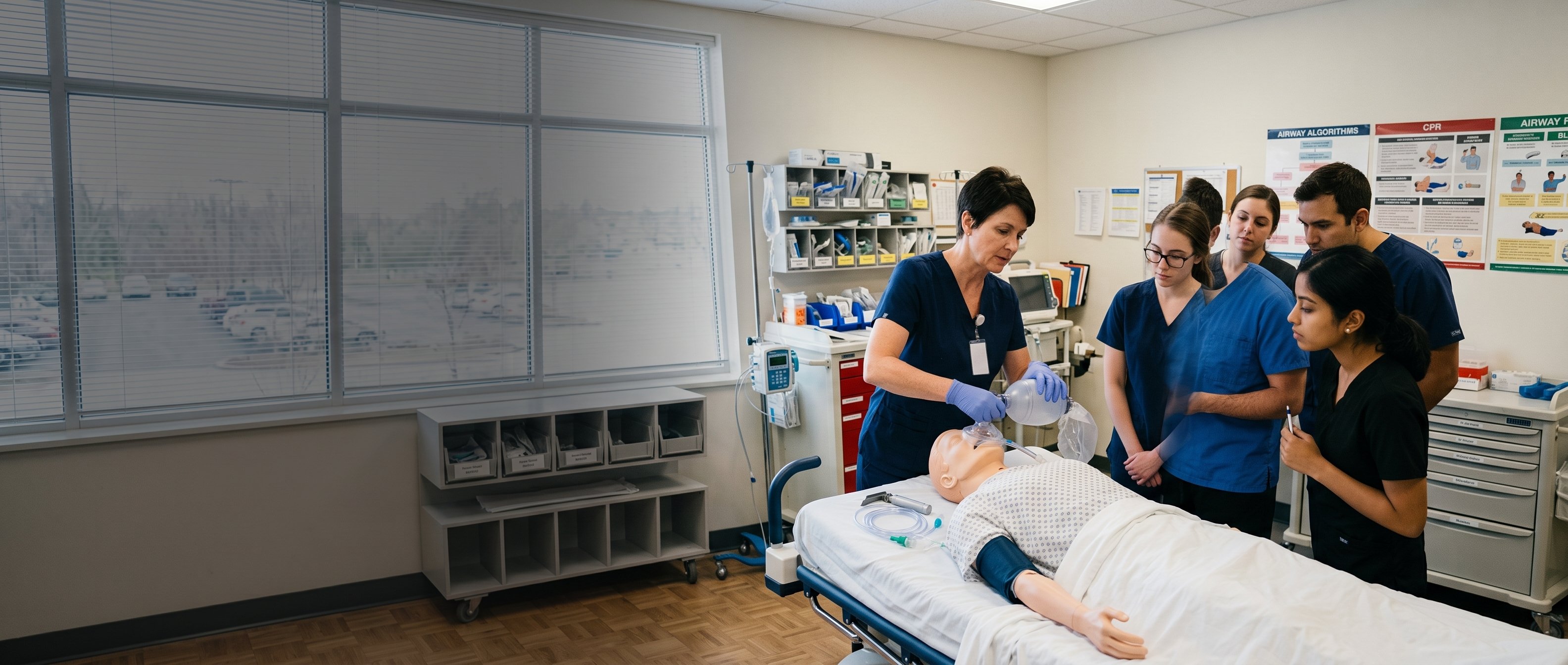
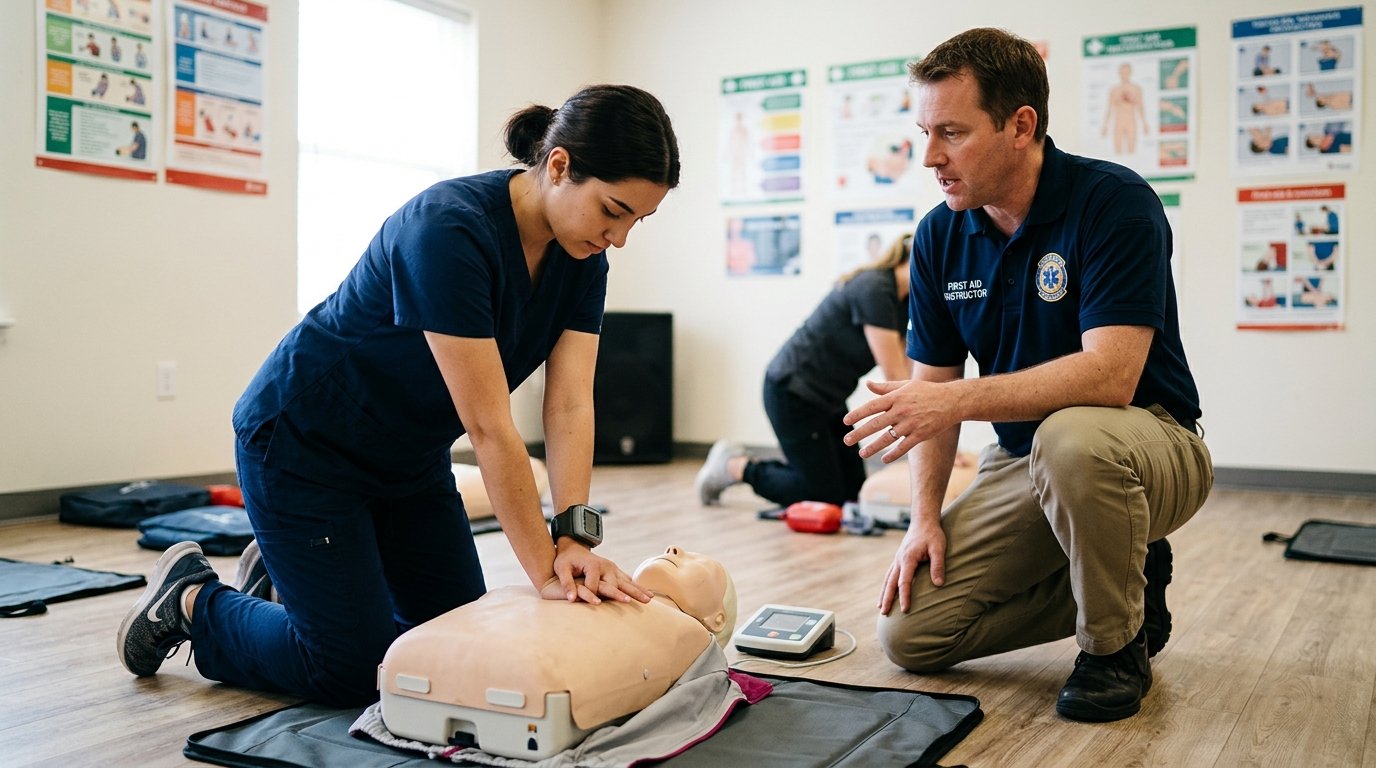
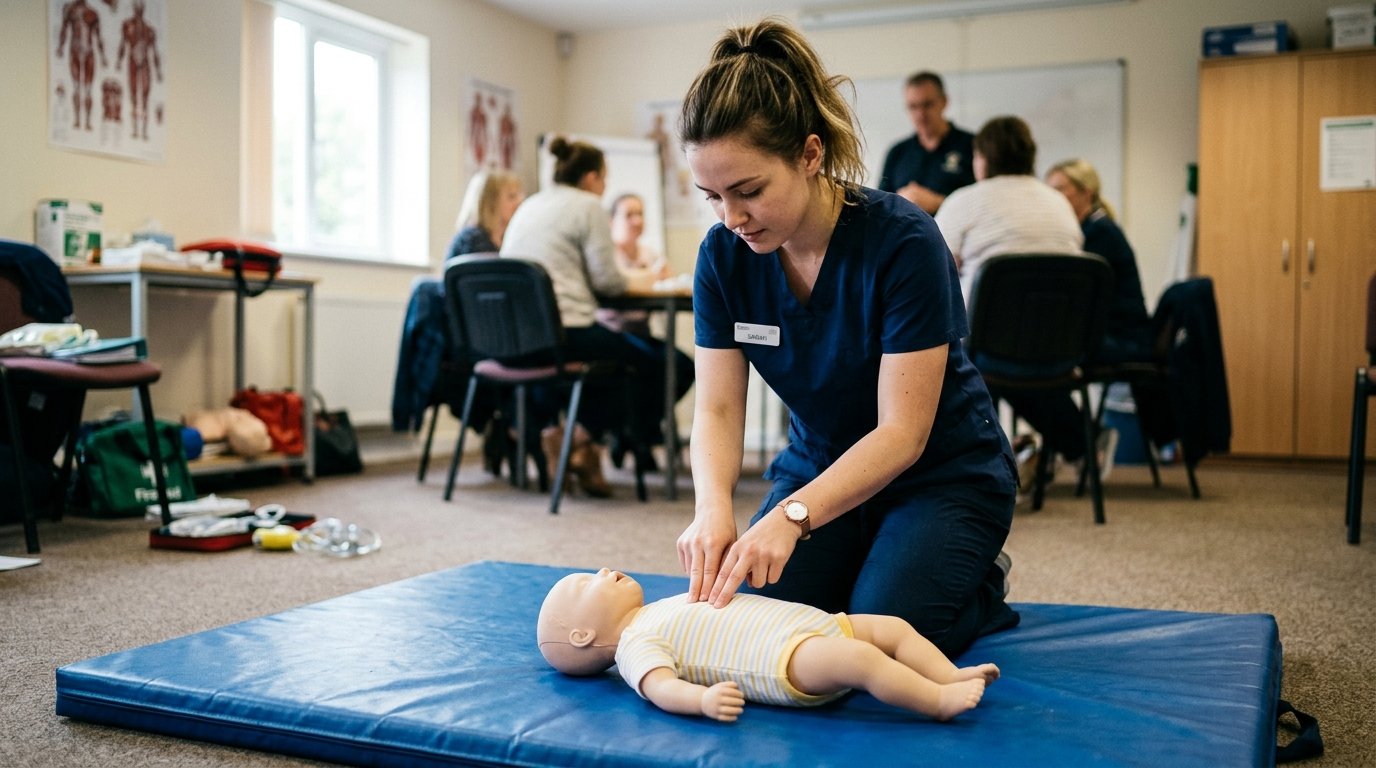
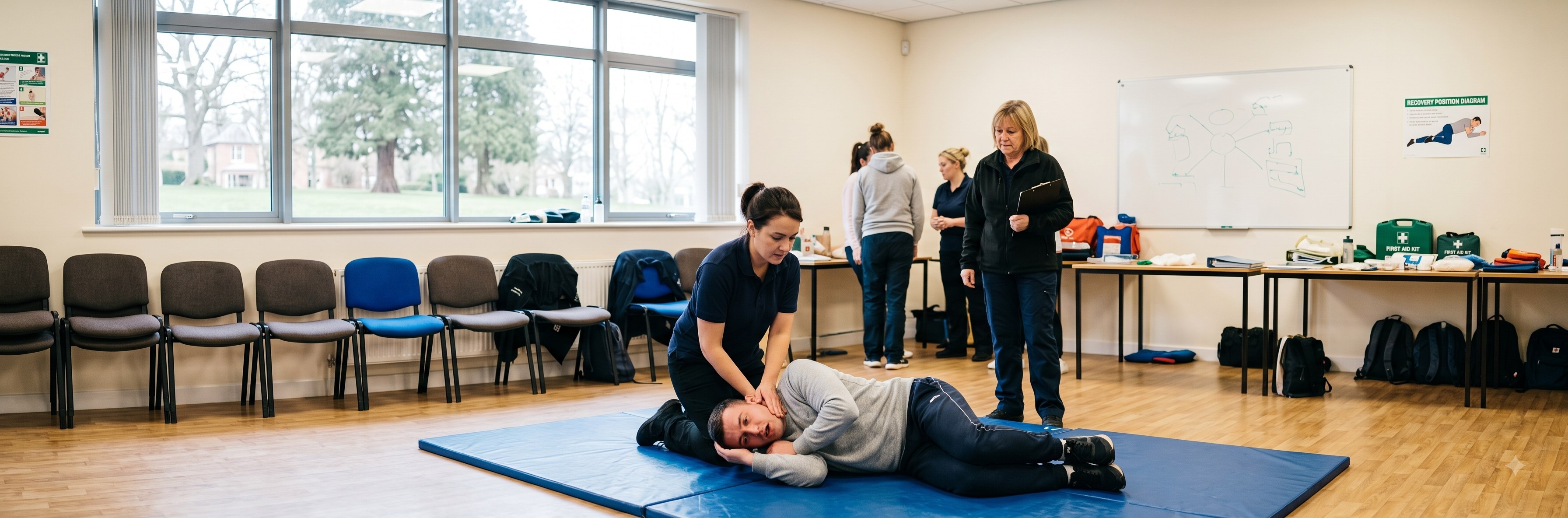
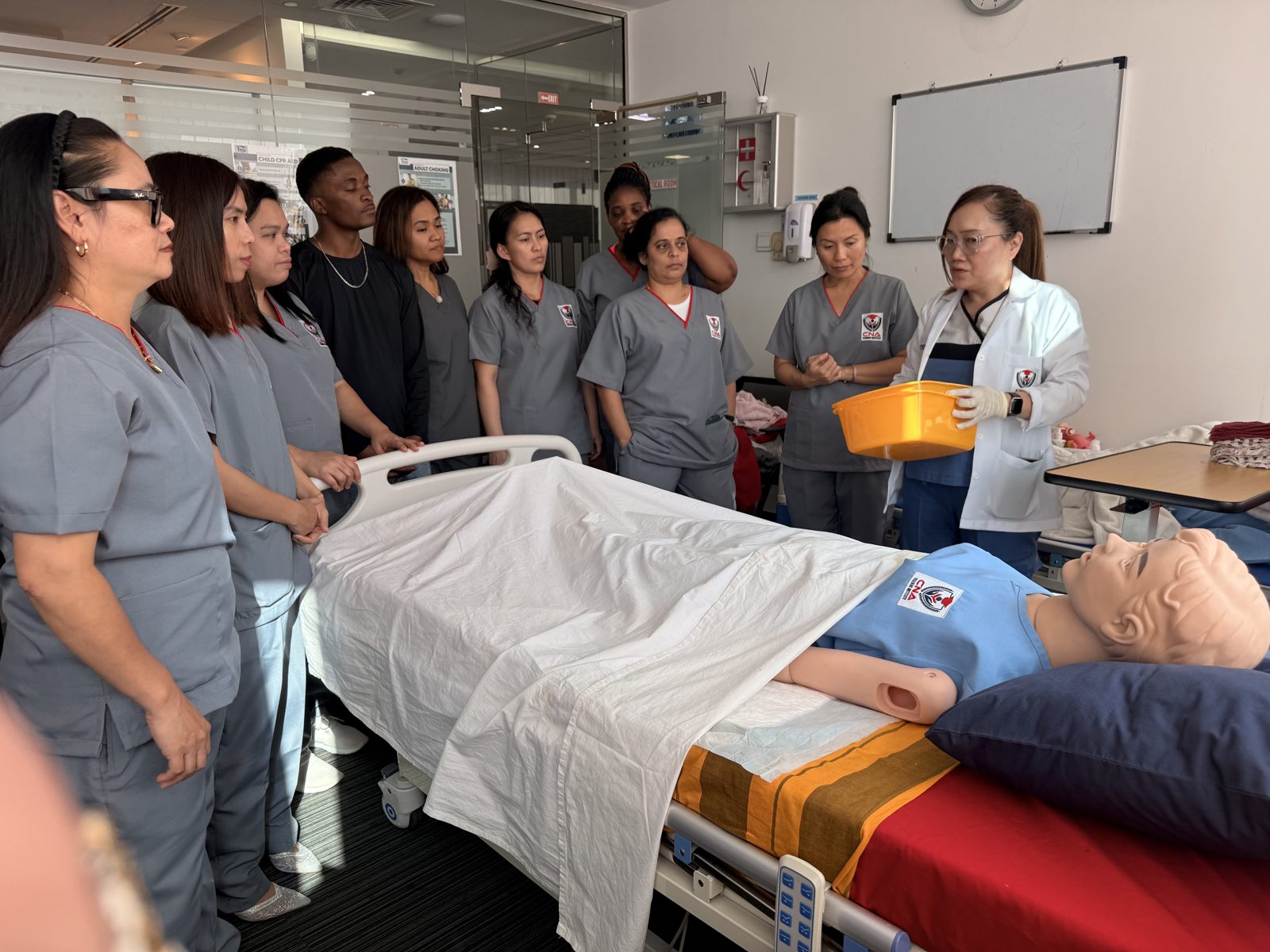
At CNA Training Institute, our Basic Life Support training runs for individuals and for groups or corporate teams alike. You can train fully in person or through our hybrid simulation learning format, which blends online coursework with real, hands-on practice in the classroom. First Aid course contents include: Assessment of the situtaion, CPR, choking response, Wound care, Burns and Scalds, bleeding control, and basic bandaging techniques.
Our First Aid Training is internationally accredited through the American Safety & Health Institute (ASHI), USA, a part of Health & Safety Institute (HSI). The First Aid training is delivered by ASHI-accredited trainers with years of experience. The certification is valid for 2 years and renewable.
First Aid Fundamentals and Scene Safety
Learn the essential principles of first aid, including assessing an emergency situation, ensuring scene safety, using appropriate protective measures, and understanding the responsibilities of a first aider. Learners develop the confidence to respond appropriately while waiting for professional medical assistance.
CPR and AED
Learn the correct technique for rescue breathing and chest compressions and why early and steady and continuous compressions are so important. Develop confidence administering an AED in a stressful situation, such as properly recognizing and positioning the pads during a crisis.
Airway Management and Choking
Learn how to open and maintain the airway and keep breathing steady, along with techniques for clearing obstructions and choking in both conscious and unconscious individuals.
Bleeding, Wounds and Burns
Gain essential skills for managing common injuries, including cuts, wounds, severe bleeding and burns. Learners are introduced to appropriate first aid techniques for controlling bleeding, protecting wounds and providing immediate care until further medical attention is available.
Medical Emergencies
Develop the ability to recognise and respond to common medical emergencies such as heart attack, stroke, seizures and diabetic emergencies. The training focuses on early recognition, appropriate first aid actions, and continuous monitoring of the casualty while awaiting emergency assistance.
Primary and Secondary Patient Assessment
Systematic assessment of the casualty, identifying life-threatening conditions and prioritising care.
Shock Management
Recognising different types of shock and providing appropriate first aid while awaiting medical assistance.
Spinal and Head Injuries
Recognising potential spinal/head injuries and applying appropriate precautions during emergency care.
Fractures, Sprains and Dislocations
assessment and initial management of musculoskeletal injuries.
Multiple Casualty and Emergency Response
Prioritising casualties and coordinating an effective response when more than one person is injured.
Advanced Emergency Response and Handover
Maintaining ongoing care, monitoring the casualty, and communicating relevant information to emergency medical services.